Wine in motion: Edouard Baijot MW, a passionate look at a sector of the future
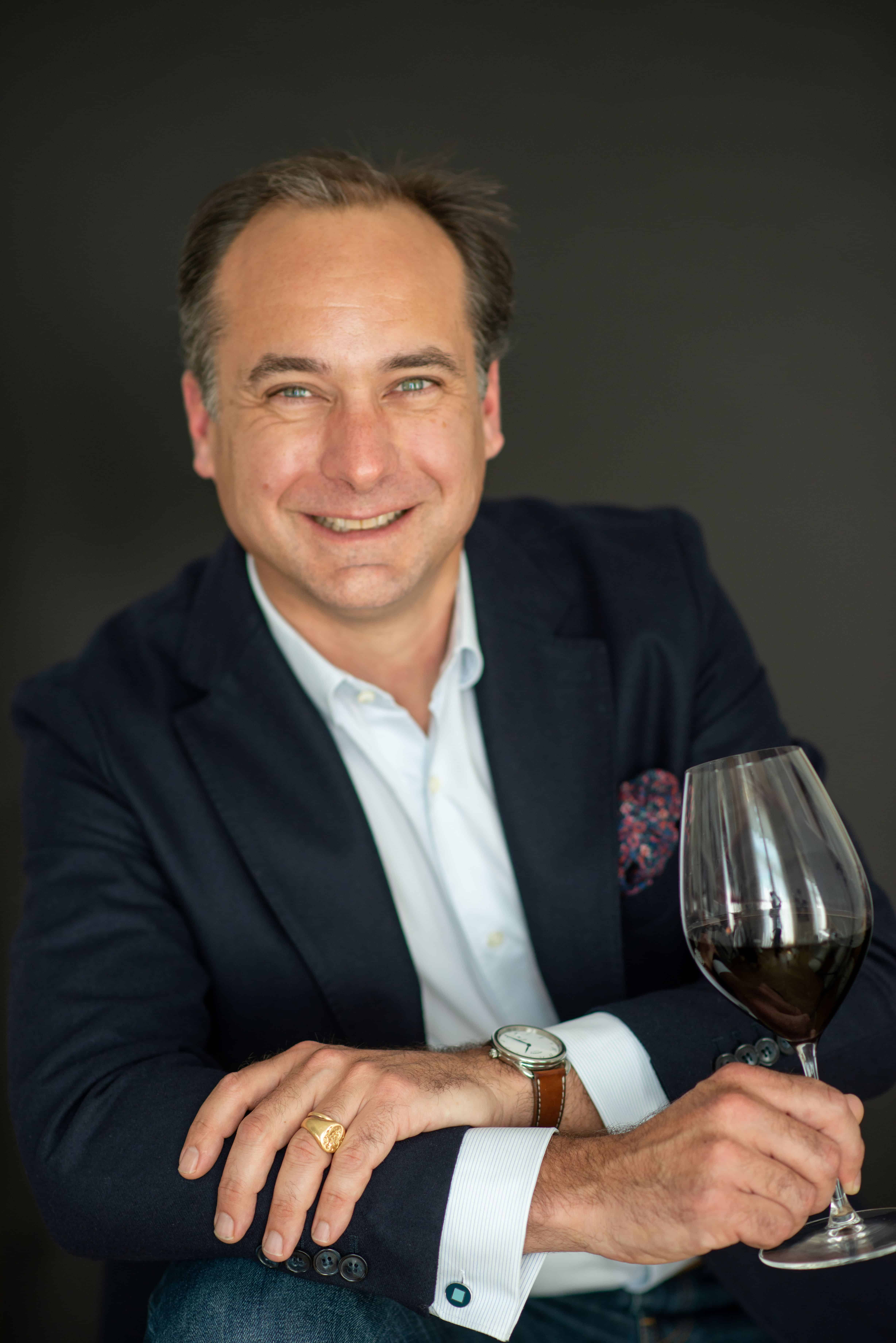
Between passion, innovation, international openness and a keen understanding of consumers, Edouard Baijot MW perfectly embodies the vitality of the wine world.
A recognized figure in the sector, he has built an impressive career, marked by more than twenty years spent at Gallo and then by his recent arrival at Laurent-Perrier in Champagne. Master of Wine since 2019, the last French person to have obtained this title, He looks at the sector with a lucid, demanding and deeply optimistic view.
His message is clear: far from being fixed, wine is a sector in full transformation. And for young talents ready to get involved, it still offers a great many opportunities.
An exceptional journey, guided by curiosity
Originally from Champagne, Edouard Baijot MW joined the wine industry in the early 2000s as sector manager at Gallo. There, he then built a first-rate international trajectory.
In 2010, he obtained the WSET (Wine & Spirit Education Trust) certification. In 2019, he became Master of Wine, a rare distinction that confirmed his expertise. In 2025, he left Gallo to return to his country of origin and join Laurent-Perrier as Director France, Belgium, Luxembourg and Hospitality.
But when he talks about his journey, Edouard insists less on titles than on what has always driven him forward: discovery.
”What initially captivated me was not only the product, but the history of families, homes, territories, and cultures. Wine is a fascinating gateway to the world — and it is precisely this wealth that made me want to devote my professional life to it.”
That curiosity never left him. For him, wine remains one of the few industries where you can learn every day, all your life.
An industry of passion, between tradition and innovation
For Edouard, there is a word that sums it all up: passion. Wine is a sector inhabited by women and men who deeply love what they do. This is what gives it a human dimension well beyond product logic alone.
”It's a fascinating industry. Everywhere you meet people who live their passion, want to share their culture, their history, their vision. Having the chance to work in a world you are passionate about changes your life, even if it requires, of course, a lot of effort and commitment.”
Wine sometimes suffers from an image that is too traditional. For him, it's an incomplete read.
”To say that wine is traditional is not wrong. But if you hear it in a negative way, it is a mistake. Recent years have been marked by a real effervescence of innovations: in the vineyard, in the cellar, in the understanding of soils as well as in oenological tools. Wine evolves much faster than we imagine.”
Soil cultivation, reduction of inputs, increased precision in winemaking, better understanding of terroirs: innovation is everywhere. In his opinion, it is even this permanent dialogue between heritage and modernity that makes the sector unique.
More demanding consumers, in search of meaning
The wine market is changing rapidly. Consumer expectations are changing, as are communication codes. For Edouard, the main underlying trend can be summed up in one word: transparency.
”Younger generations want to understand what they are consuming. They are no longer satisfied with a marketing speech. They want to know where wine comes from, how it is made, who wears it, in what territory it is located. They are looking for meaning, connection, authenticity, and a story.”
What strikes him is also The level of demand of young consumers.
”They ask a lot of questions, sometimes with an impressive level of detail. This pushes the sector to gain in clarity, pedagogy and sincerity — and that is, after all, an excellent thing.”
Another significant development: wine is no longer limited to the bottle. It is also experienced through wine tourism, visits to wineries, meetings with producers, and more relaxed food-wine pairings. Tastes are also evolving, with a stronger search for freshness, fruit and more digestible wines.
A cultural, profoundly human product
At a time when we talk a lot about technology and artificial intelligence, Edouard recalls the essentials: wine is first and foremost a human adventure. He likes to quote this sentence from journalist Pierre Veilletet: ”There are no great predestined vineyards, there are only the stubbornness of civilization.”
It's all there. Wine tells the story of territories that women and men have patiently shaped, sometimes under difficult conditions, generation after generation.
”There is no wine without man. Wine is undoubtedly one of the most successful expressions of agriculture, because it tells the story of what civilizations knew how to build on sometimes hostile lands. It is a deeply cultural product, as well as agricultural.”
Faced with AI, he is neither worried nor nostalgic. He sees it as a useful tool to better inform, better structure certain discourses, and gain transparency. But it sets a clear limit: emotion will never be replaced.
A global market, rich in opportunities
Wine is now a deeply international market. Edouard observes with interest several development areas: Poland, Brazil and South America, South Korea and Asia, but also the Middle East.
”The growth of wine is increasingly also taking place outside of historical markets. This is excellent news for young people who want to join the sector: it opens the way to more opportunities, mobility and diversity in career paths.”
This globalization also requires specific skills: speaking several languages, including English above all, of course, but also understanding cultures, knowing how to read markets, and adapting to varied environments.
Distribution is also what makes wine special. Direct sales, wine shops, CHR, mass distribution, large-scale distribution, export, e-commerce, wine tourism: there are multiple channels. This complexity, reinforced by the responsibility associated with the fact that it is an alcoholic product, also creates value for those who know how to explain, transmit and build relationships.
”Wine is a wonderful product, but it should be consumed in moderation. This requires us to educate, explain and promote responsible consumption. I really like this Provençal proverb: drink little to drink a long time.”
A sector that needs talent
For Edouard, wine needs curious, flexible and open to the world more than ever.
”We're talking to very different consumers. It is therefore necessary to have talents capable of understanding this plurality, of learning quickly, of adapting, of exploring. The diversity of profiles is a strength for wine. ”
Communication, marketing, production, sales, export, export, distribution, distribution, hospitality, business development... there are numerous opportunities, in small structures as well as in large houses, in cities and in the countryside, on local and international markets.
His advice to young people is clear: ”Educate yourself, educate yourself, explore all the diversity of wine. Don't put barriers on yourself. The more you discover this universe, the more you will find your place in it.”
A sector with a future
Despite the changes in progress, Edouard is very optimistic. Mature markets can be reinvigorated, new consumers remain to be conquered in the world, and the wine map will continue to evolve.
”You don't have to be afraid of change. Territories and associated practices are not fixed and this will create new opportunities. Since the very origins of mankind, has it not been the vocation of agriculture to adapt to the vagaries of time? Wine is not at the end of a story, it is at the beginning of a new chapter.”
And if he had to summarize his vision in one sentence, it would be that of the resistance fighter Gabriel Delaunay:
”There is a wine civilization, it is one where men seek to know each other better in order to fight less.”
For young people looking for a demanding, human, international and fast-paced sector, the message is clear: wine continues to offer an extraordinarily rich playground. And he needs new energy to write the sequel.
6_200.jpg)
_EN_200.jpg)